
Research overview
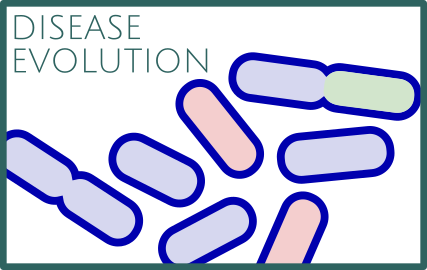
Diseases like cancer and bacterial infections inevitably evolve resistance to treatment. Can we understand and steer this evolution, guiding it toward more susceptible states? We are exploring a number of directions to tackle this challenge, including adapting stochastic control techniques from seemingly unrelated areas like quantum physics and modeling resistance-enhancing interactions within tumors.
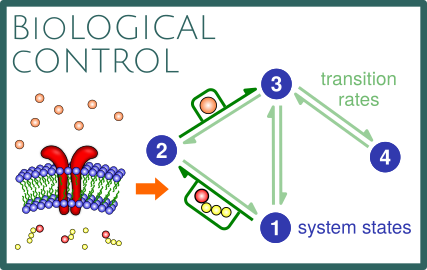
Despite their intrinsic randomness, biochemical networks
reliably process and respond to external stimuli. Can we
harness this ability to drive these systems along chosen
trajectories? We
are developing protocols for fine-grained control of
networks. These can provide blueprints for novel forms of
experimental manipulation. and also help us understand the
way nature regulates itself.
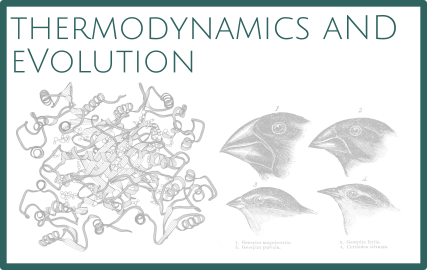
Biology is full of complex mechanisms whose
evolutionary predecessors must have consumed significant energy
resources without any clear fitness benefit. So how do such mechanisms
evolve in the first place, and how strong is the guiding hand of
thermodynamic optimization? We are investigating these questions both at
the cellular level, in systems like gene
regulation by microRNAs, and also at larger scales in models of
growing organisms.
Part of the joy of being a statistical physicist is the
broad scope of the underlying ideas and methods. Through a
variety of collaborations we are working on biosensor
design and thin-film optics, the
parallels between nonequilbrium physics and
machine learning, and even using AI for art
attribution based on surface topography of paintings.